


In 2012, the gourmet food truck movement was sweeping through cities across North America. A new generation of trucks had moved well beyond standard items like burgers and fries, offering everything from Korean tacos to lobster rolls to artisanal grilled cheese. TV shows like Eat St. and, later, Food Truck Face Off turned the operators into minor celebrities. If you were organizing any kind of outdoor event in Toronto and didn’t have at least one food truck on site, you weren’t on trend.
Food and restaurant coverage had become a central part of blogTO’s editorial identity, and I didn’t want us to be an afterthought when it came to where people went to find out about Toronto’s growing food truck scene. Other publications had started covering the trend, and when they did, they kept referencing the same source: a website called Toronto Food Trucks, run by a guy named Marc MacDonald.
Marc had built something smart. He’d secured a URL that dominated search results whenever anyone searched for “Toronto food trucks” on Google. He’d filled the site with useful information, both for people curious about what trucks were out there and what they served, and for aspiring food truck owners trying to understand the city’s confusing and evolving rules and regulations. He had created a food truck infographic that had been widely picked up and referenced by local media outlets.
But Toronto Food Trucks wasn’t much of a business yet. Marc had been offered a full-time job at Shopify and was looking to sell to someone with the motivation and resources to keep it going. I was a willing buyer. We agreed on a price of $5,000, which included the website, an email list, a Twitter handle, an Instagram account and a Facebook page. If food trucks were going to be the next big thing in Toronto’s food scene, we now had a brand and a platform positioned to be at the centre of it.
We moved quickly. The site was updated to indicate its affiliation with blogTO. Whenever we published food truck content on blogTO, we’d link to the Toronto Food Trucks site, and links would flow the other way too. The content remained separate, but the two brands reinforced each other. Some of our blogTO writers, like Amy Grief and Liora Ipsum, contributed content to the food truck site. Jesse Milns shot photos.
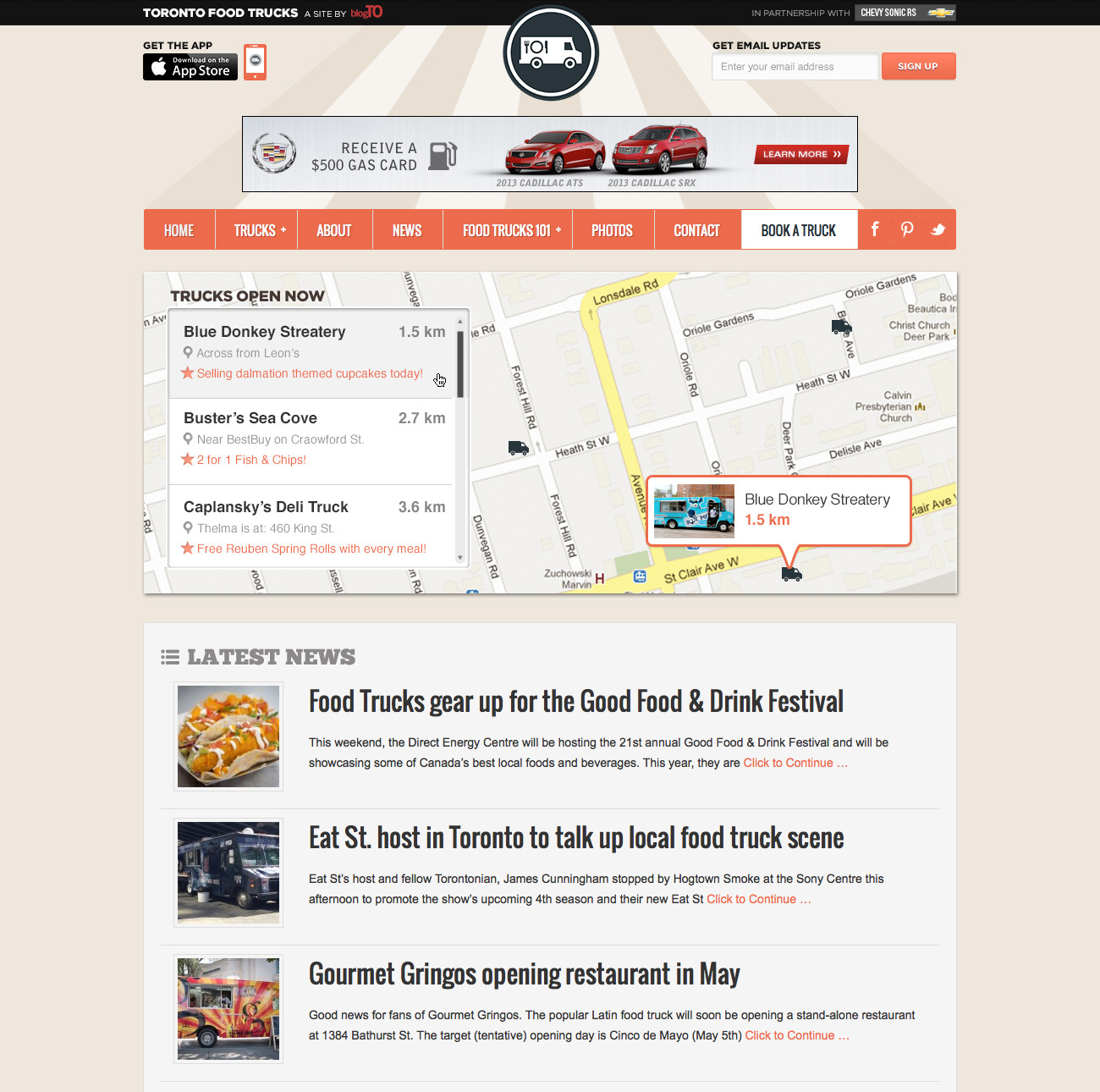
On Marc’s recommendation, I hired Casper Yue part-time to establish relationships with local food truck operators, write about food trucks and events and manage the site’s social media accounts. Traffic wasn’t anywhere near blogTO’s numbers, but it was climbing. Social media followers were growing. Things were moving in the right direction.
The business was inherently seasonal. Traffic usage peaked in the spring and summer, when people wanted to eat outdoors, and dropped sharply in the winter, when most trucks went dormant. During the six warmest months of 2015, the site generated nearly one million page views and attracted 300,000 unique users. For a niche food-truck publication, those were encouraging numbers.
There still seemed to be more upside. I was ready to invest more heavily. Dondy Razon, a colleague from my Ogilvy days, designed an updated website and iPhone and Android apps.
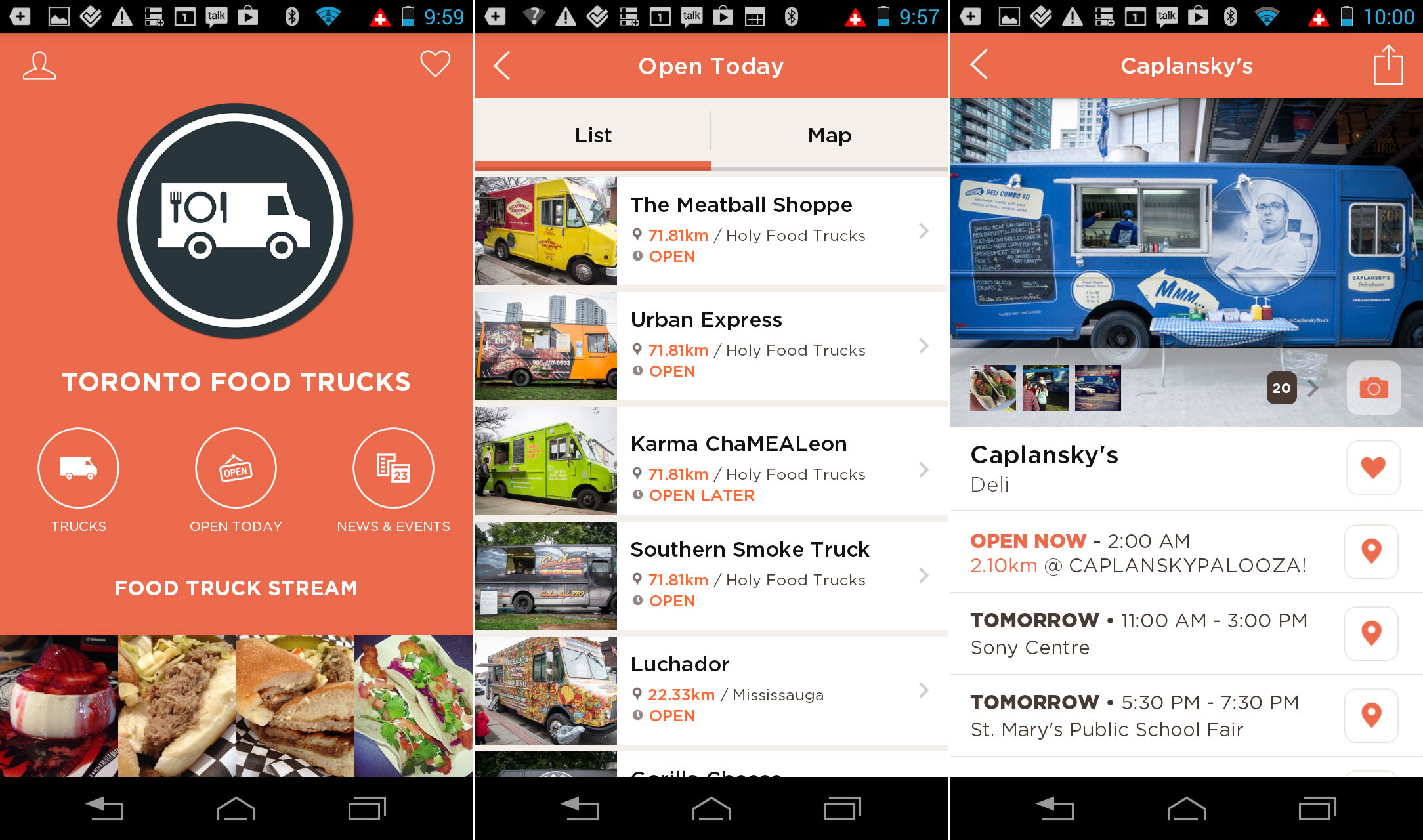
Abraham handled the development of the website, building on a WordPress CMS that, unlike the one we’d struggled with for blogTO, worked smoothly. We later added push notifications so users could opt in to be alerted when one of their favourite trucks was nearby.
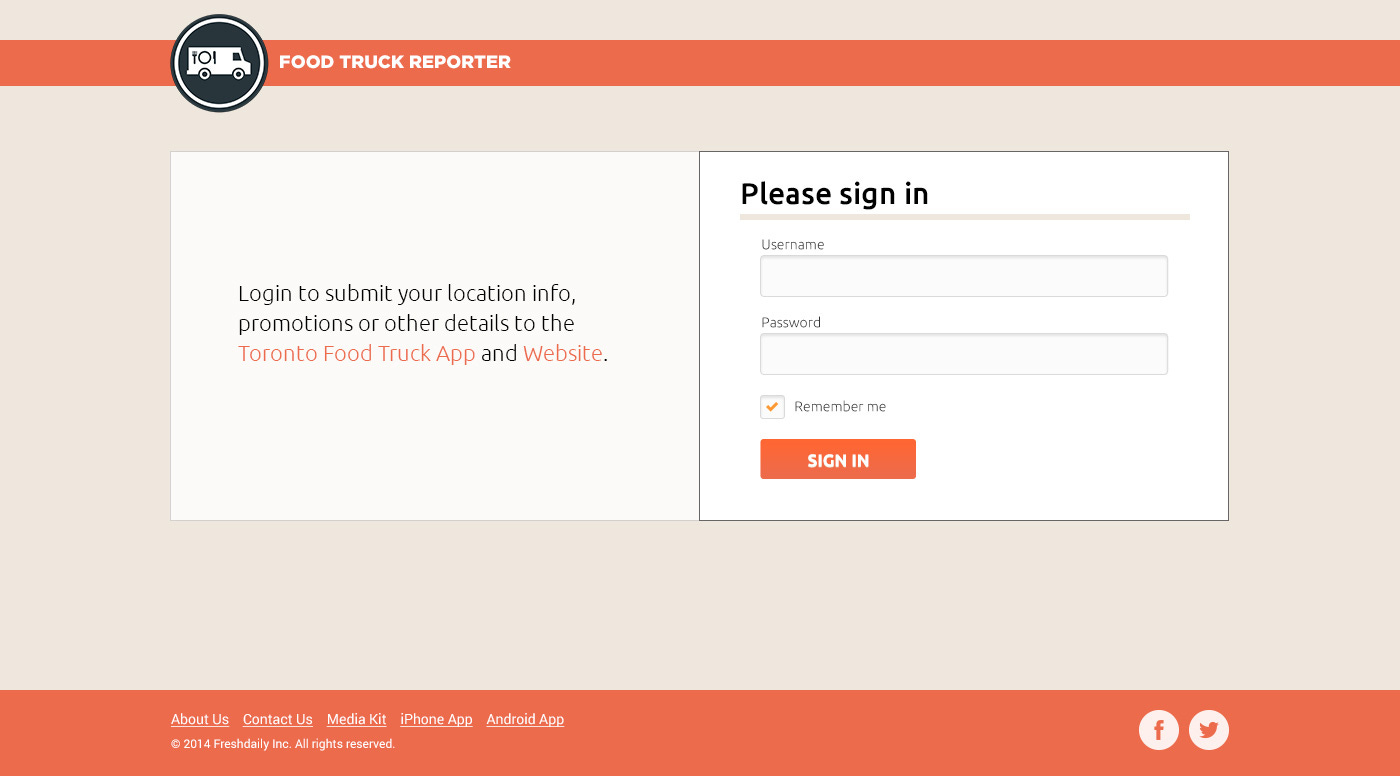
The site wasn’t just editorial. We built a feature that let users find food trucks on a map, and a companion tool that made it easy for truck owners to update their real-time location and upcoming schedule. The catch was that this depended on the owners actually remembering to log in and enter accurate data, which proved to be a persistent challenge. By 2015, it was clear we needed someone to be more involved in managing the relationships with truck owners, promoting locations through our social channels, and keeping the data clean.
That someone was Jaclyn Skrobacky, who would also take on responsibility for managing blogTO’s social media accounts. Jaclyn turned out to be one of the most important hires I ever made. She became the connective tissue in our operations, touching almost every piece of web, video and social media content we produced over the next decade. After the ZoomerMedia acquisition, she transitioned to a new role and remains with the company today.
We also expanded the platform beyond Toronto. We launched separate food truck websites for Vancouver, Montreal, Calgary and Winnipeg, each with its own URL, built on the same CMS and design templates. For Montreal, we invested in making the site fully bilingual.
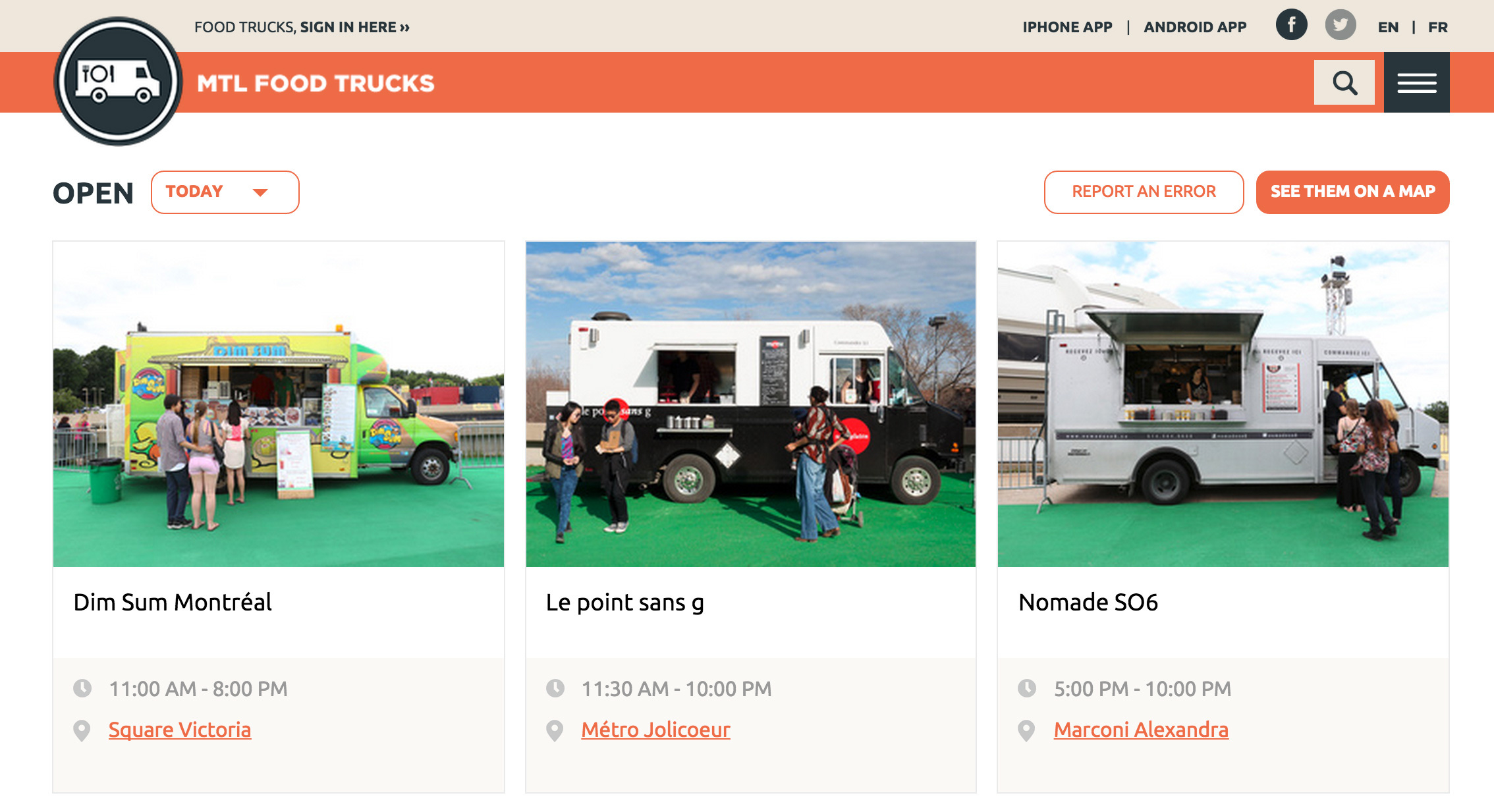
I hired freelance writers and photographers in each city to produce local content. The iPhone and Android apps were rebranded simply as “Food Trucks,” with a city selector that let users choose which market to make their default.
One of the most valuable features of the site was the “book a truck” form. Event organizers, corporate offices, wedding planners and anyone else looking to hire a food truck could submit a request through the site. I received a copy of every submission, so I could see firsthand how heavily it was used. Hundreds of inquiries came through over the years. Truck owners told us it was an incredibly important source of leads for the events and functions they catered. I was glad we could provide tangible value to the food truck community.
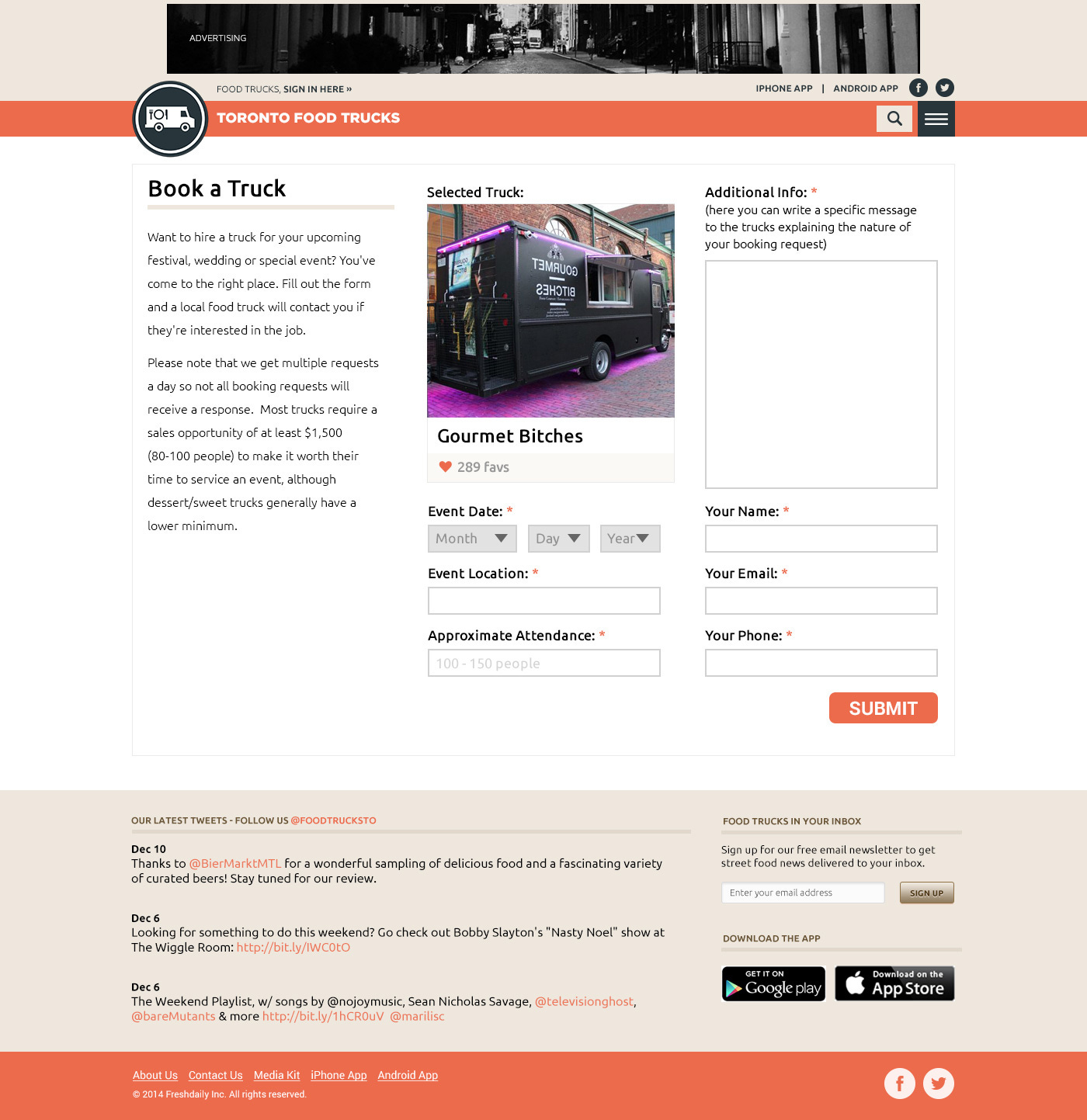
Some of the inquiries were more interesting than others. In 2014, someone from Lorne Michaels’ office at Saturday Night Live reached out through the form. They wanted to send a food truck on the first day of production for one of his shows shooting in Toronto, something “locally famous, delicious and hot” for a cast and crew of about 80 to 100 people.
We also heard regularly from people in other cities. The NYC Food Truck Association once proposed a partnership to help them launch something similar in New York. The United States was never part of my strategy, so I declined.
Competition eventually arrived in the form of a site and app called Streetfoodapp, focused exclusively on reporting real-time food truck locations across every city we’d expanded into, including Toronto. They didn’t have an editorial operation; there were no articles and no event coverage, but their location data was consistently more comprehensive than ours, so Jaclyn spent time cross-referencing their listings to fill gaps in ours.
For a few years, the food truck scene in Toronto had real momentum. Festivals like AwesTRUCK and the Toronto Food Truck Festival drew enthusiastic crowds. They complemented a broader street food movement that included events like CraveTO and the Toronto Underground Market. It felt like food trucks were becoming a permanent part of the city’s culinary landscape.
They weren’t. The growth of food trucks in Toronto, and across much of Canada, was ultimately strangled by municipal regulations that made it nearly impossible for trucks to park in the most desirable locations on city streets. They were pushed to the margins, relegated mostly to festivals, private events and corporate catering. The number of active trucks declined. Prices went up. Consumer excitement faded.
Web traffic and app usage flattened. Revenue, which had always been modest, never reached a level that could sustain the operation independently. The food truck sites were subsidized by blogTO, and as the market contracted, the case for continued investment weakened.
By the time the pandemic was over, I had already decided to wind down the operation and stop investing in the brand. Toronto Food Trucks had been a $5,000 bet on a trend that seemed, for a few years, like it might reshape how a city eats. The bet didn’t pay off the way I’d hoped. But for the truck owners who booked hundreds of gigs through our platform, and for the readers who discovered their new favourite meal through the site, it wasn’t nothing.
In my next post, I’ll circle back to a story I’ve been meaning to tell for a while: what happened with Beyond Robson, our site in Vancouver.
Do you administer “only in Canada FB page? Just curious