


The year started with the site going dark. In mid-January 2010, blogTO was hacked. A malware infection compromised our server, and some of the website's files were deleted. Readers started sending us screenshots of antivirus warnings. It was the kind of crisis that I had always tried to avoid. For a publication that depended on people showing up every day, every hour the site was compromised meant readers we might not get back. The inbox filled with concerned emails. We didn't have good answers yet.
Abraham, our longtime developer, spent every available hour trying to trace the breach. A hacker had planted a backdoor script that granted them access to the server, and malicious code was being injected into our JavaScript files, triggering the warnings readers saw.
We needed more help. My friend’s younger brother, Deniz Okten, who specialized in security, stepped in. Together, they worked to determine whether the vulnerability was in our CMS or with our hosting provider, Media Temple. For weeks, we didn’t know. When they finally traced it to the hosting environment, we started over: new server, new code, every administrative access point locked down.
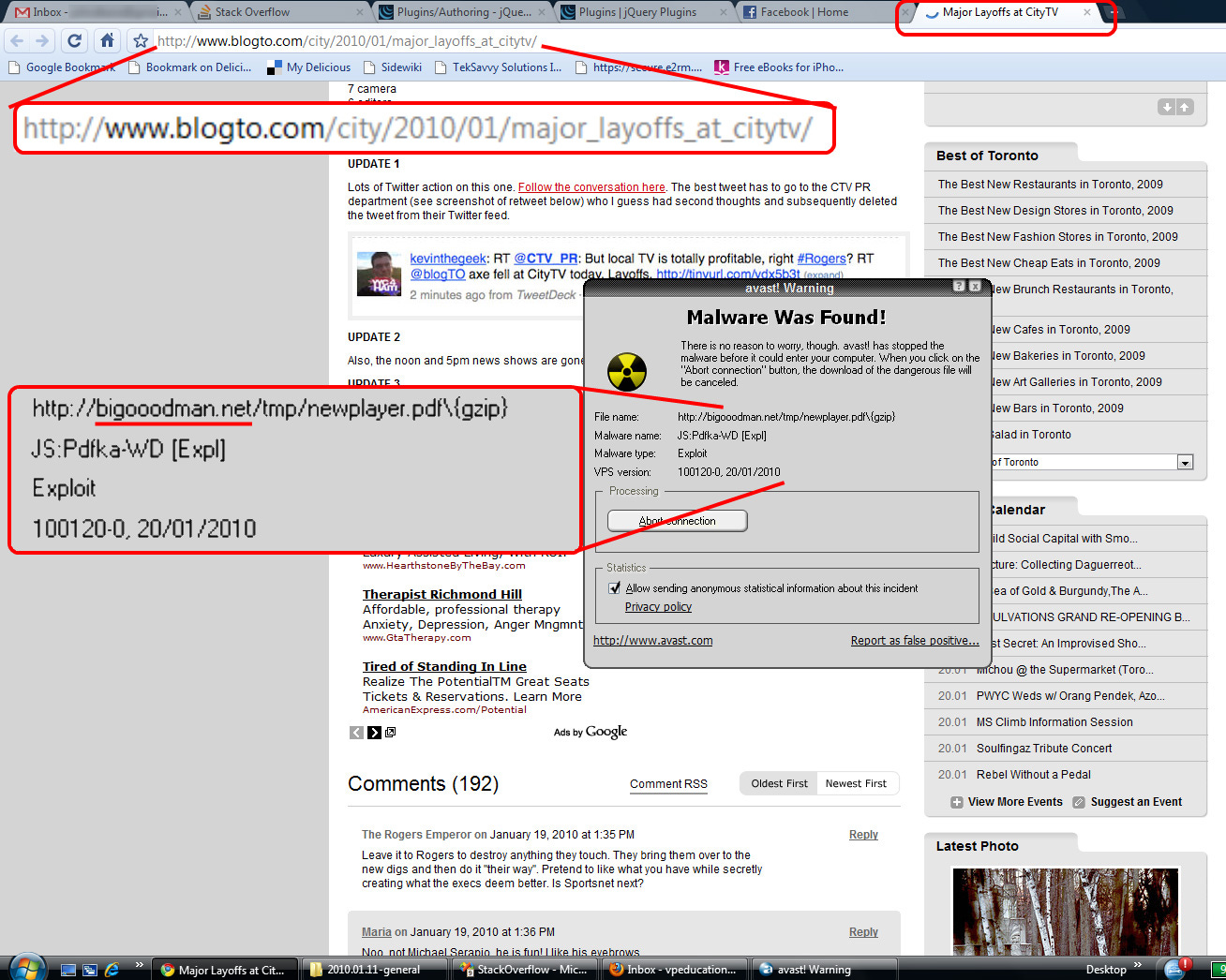
The whole episode consumed about a month. A month of wondering how much trust we’d lost with the audience we’d spent five years building. It confirmed something I’d been worrying about for a while: our technical foundation was overdue for a serious overhaul. Movable Type, the CMS we’d been running on since the very beginning, had fallen out of favour with the developer community. Finding people who could work with it was becoming genuinely difficult.
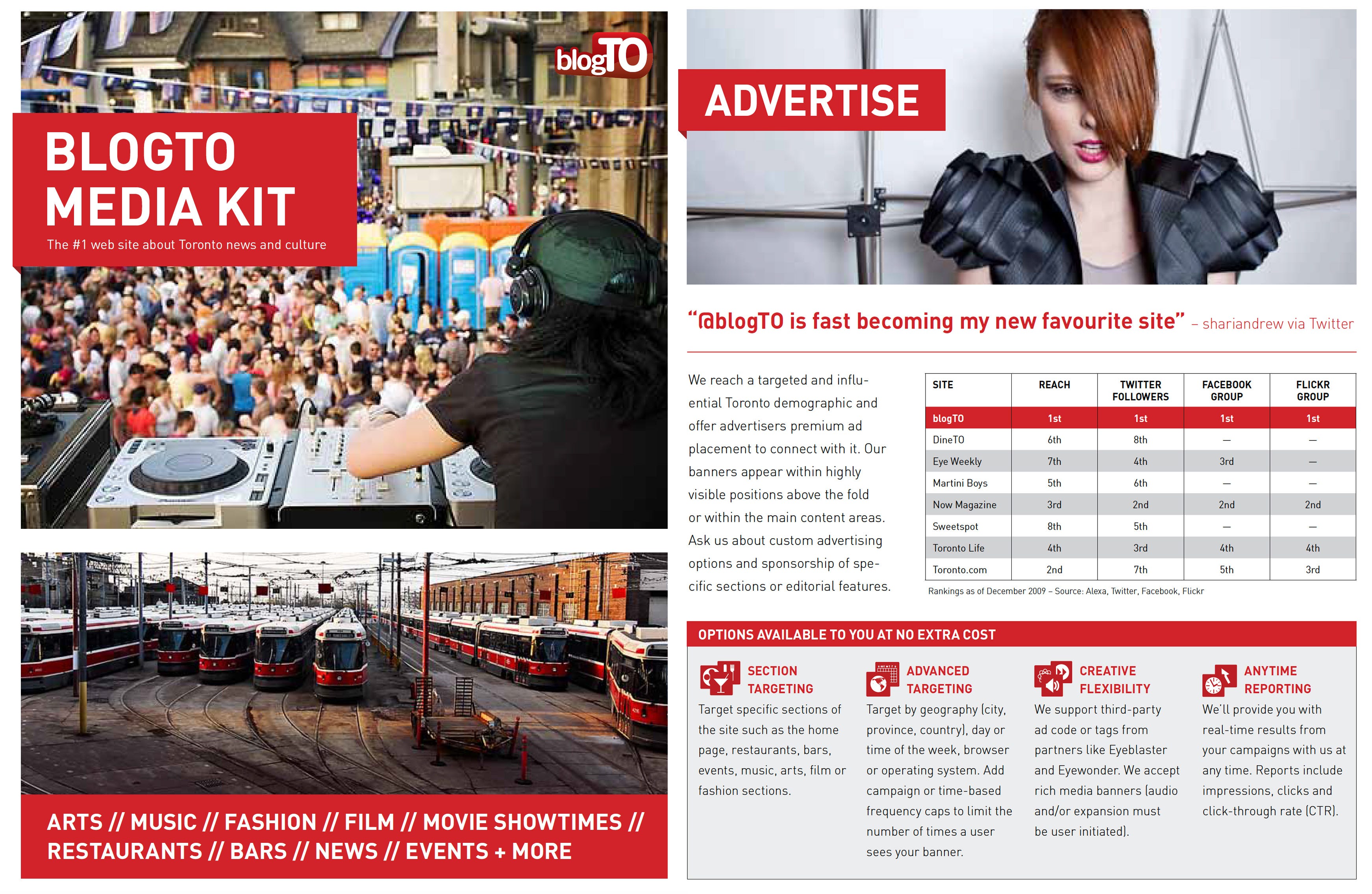
Despite the malware incident, we kept growing and soon boasted that we had reached 375,000 unique users and generated 1.5 million page views per month. Our media kit described blogTO as the number one website for Toronto news and culture. The Toronto Blue Jays, Ford, Nike, Mirvish, OCAD and Bud Light were all buying campaigns. The City of Toronto had become a regular advertiser, and we ran reader-submitted photo contests with them for events like Nuit Blanche and Summerlicious.
It was a year of significant changes on the editorial team. Tanja had left to join Yonge Street magazine, a newly launched website. By the end of the year, Jerrold would scale back his role to take a full-time job at Loblaw Digital. Derek Flack, who had been a contributor to the site, stepped up to replace him as Managing Editor.
These departures reflected a pattern. blogTO had become a launching pad. Many of our contributors had come to us as aspiring writers, photographers, and journalists seeking their first opportunity in media. They got bylines, built portfolios, covered real stories, and then moved on to established publications and companies where they could earn more money. It was something I was proud of, even as it created a constant challenge of replacing talent we couldn’t afford to keep.
Some of the newer contributors included future Globe & Mail columnist Robyn Urback, who mostly wrote about food, fashion and something we called “Get to know a street.” Ben Spurr was crafting curated weekly event roundups in a column we called Radar. Luke Champion, who now owns the excellent Good Cheese on Gerrard East, was eating a lot of fries, curds and gravy as he completed The Great Toronto Poutine Challenge. Lauren Wilson was writing a series called Fridge Files that photographed and documented the contents of people’s fridges. A similar recurring feature quickly surfaced on Toronto Life.
That year, we also started receiving unsolicited emails from people asking about internships, the beginning of what would become a long pipeline of writing, photography, and, later, video and social media interns, many of whom eventually became full-time staff or regular freelancers.
Other publications were paying attention to what we were doing. Sometimes too closely. We’d regularly see our stories turn up on other sites the day after we published them, almost always without credit. I once reached out to the Toronto Star to complain. The writer apologized and told me they had actually included a mention that blogTO had reported the story first, but their editor had removed it. On CBC Radio, we’d hear our stories discussed on air. Instead of crediting blogTO, they’d simply attribute it to “a Toronto blog.”
The competitive landscape kept shifting. A new publication called The Mark launched with considerable funding and fanfare, positioning itself as a platform for long-form essays on politics, economics and culture. I didn’t think the model would work, and it didn’t, but while it lasted, they were actively recruiting our writers, offering rates we couldn’t match. The Mark paid $450 a week for a full-time contributor. Our rates were lower. They succeeded in luring Ben Spurr away, and I knew they’d approached others.
Yahoo! was also making a big push into local coverage. They asked if they could syndicate our content. They weren’t offering to pay for it. I said no.
We continued to build out sponsored editorial sections, extending the model that had started with the Zune-backed Artist Gallery. A Filmmaker’s section backed by Sony featured profiles of emerging local directors. A section called Movers, Shakers and Jet-setters, sponsored by Virgin Atlantic, profiled people like Kevin O’Leary and Amanda Lang.
A Toronto Fashion Week section, sponsored by Stylesense, featured runway coverage from our regular contributors Kevin Naulls and Briony Smith. We hired James Kachan to take photos. Istoica filmed all the collections. We uploaded their videos to Vimeo, which was the popular video platform of the day.

Fashion Week, held twice a year, was an event we devoted significant resources to because the sponsorship covered the costs. The sponsor had no say over the editorial, but they were the exclusive advertiser alongside the content. That distinction always mattered to me.
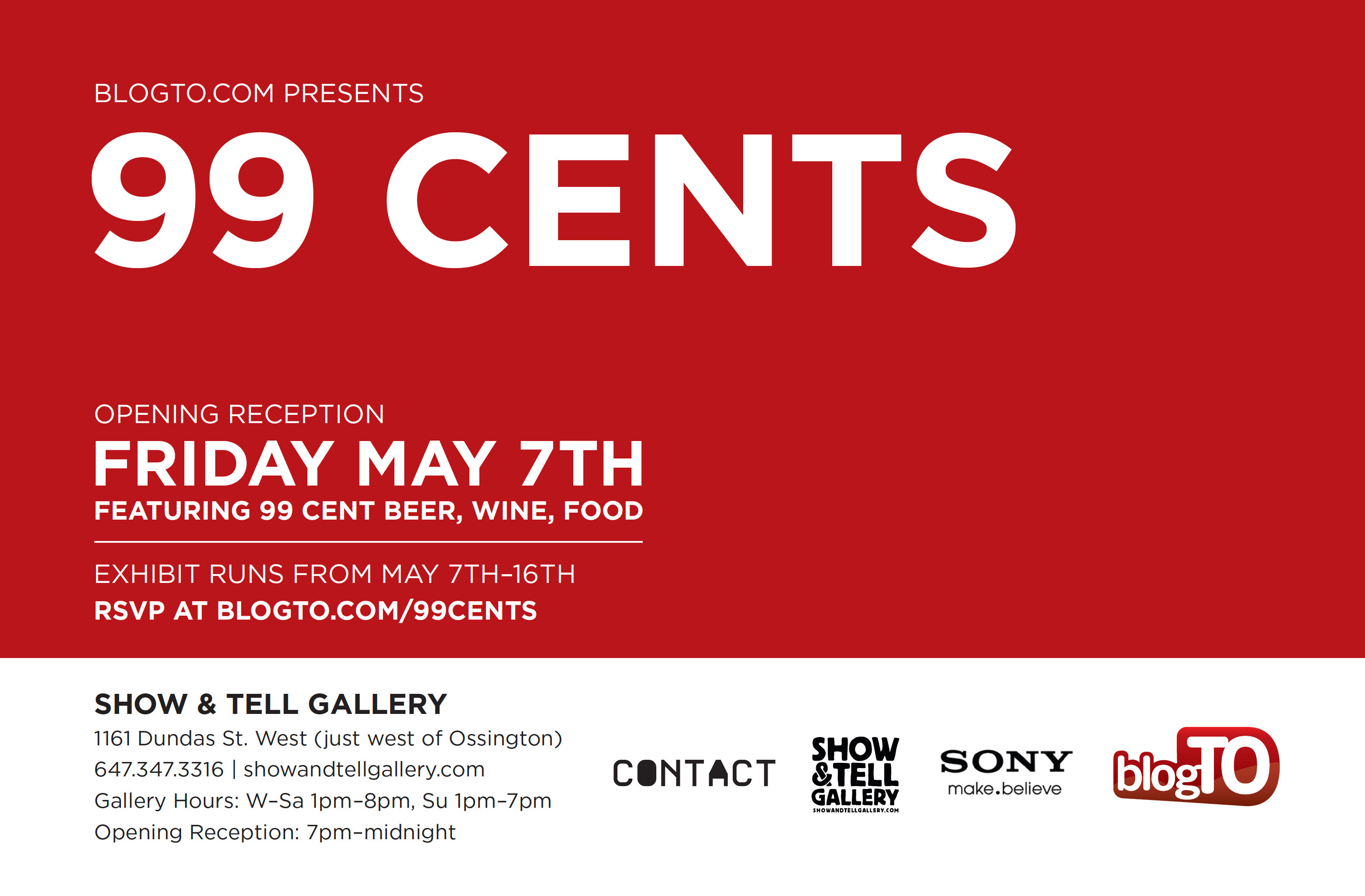
We partnered with the Contact Photography Festival again, this time for an exhibit called 99 Cents. The theme explored the psychology of 99-cent pricing and invited readers to submit photographs that captured the idea. The top five photos were chosen by popular vote, and five more were selected by a jury. The exhibit was at Show & Tell Gallery on Dundas West, and we got Sony to sponsor it. At the opening night party, beer and wine were priced at 99 cents. We served custom blogTO cupcakes again. DJs played. The gallery was packed despite a downpour.
In the spring, we released another edition of our neighbourhood maps, expanding to Ossington, The Junction and Baldwin Village.
In June, the G20 Summit came to Toronto, marking a pivotal moment for the site.
There were barricades across the downtown core and protests in the streets. Heavily armed police were on every corner. It felt like the first major international news event in Toronto, where blogTO could demonstrate what it meant to have a community behind it. Photos poured in from readers through email and our Flickr pool. Twitter erupted. Our writers and photographers threw themselves into covering something that felt important and historic, and none of it required press credentials.
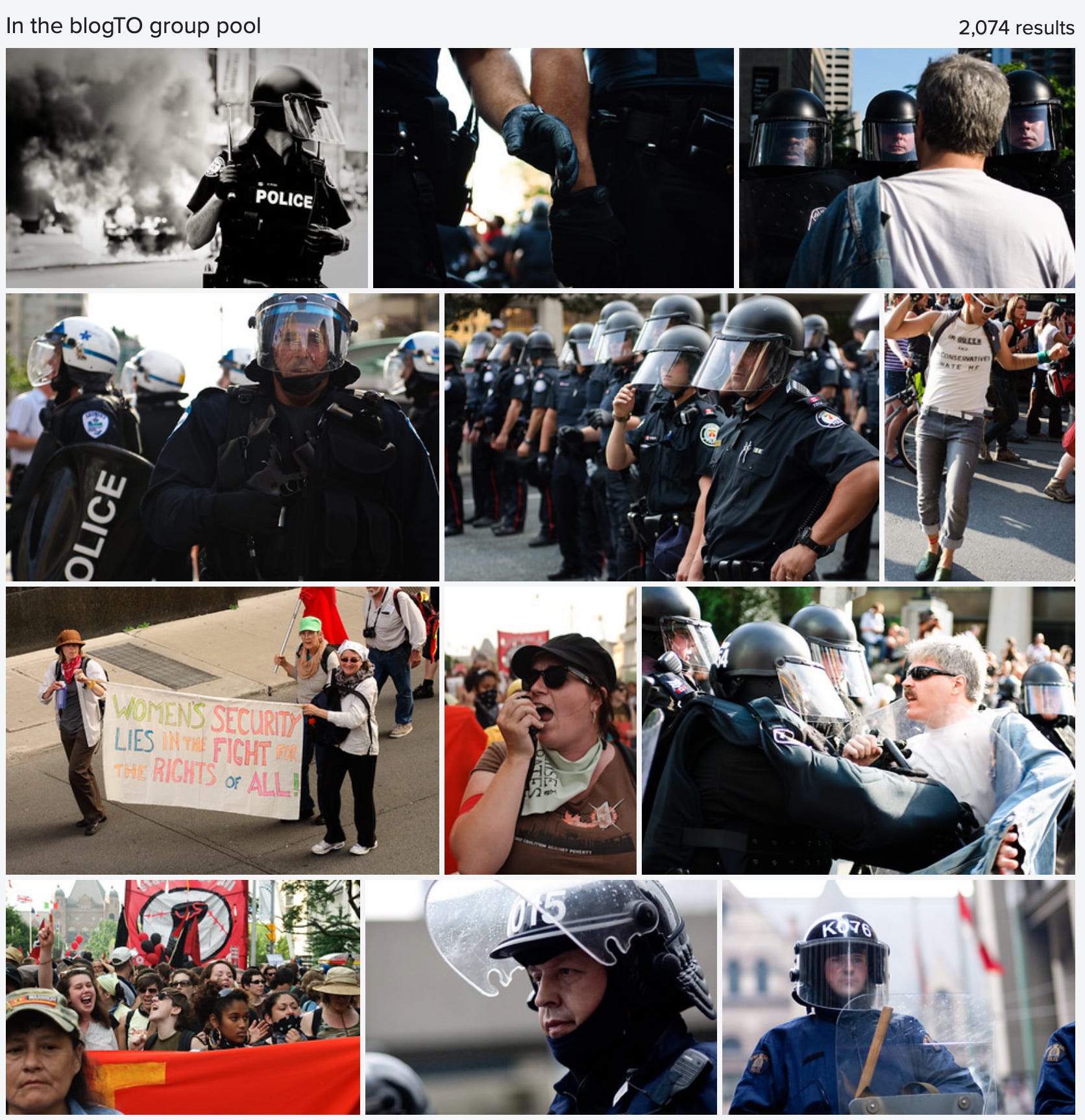
Jerrold coordinated the team’s coverage while doing a significant amount of the reporting, crowdsourcing, and tweeting himself. I was in the thick of it too, visiting the detention centres on Eastern Avenue to document what was happening. The photos I took there were later sought out by academics, authors and documentary filmmakers revisiting the events of that week.
In the wake of the G20, Twitter became an even more central platform for us. We were one of the biggest accounts in Toronto. Jerrold developed a comprehensive strategy with guidelines for tweet timing, frequency, hashtags, and community engagement. Sharing links to our own articles was a small fraction of what we were doing. The real value was in the conversation.
We also started writing regularly about business closings after our analytics showed that readers were drawn to it. We coined a term for it, Deadpool, borrowed from the blog TechCrunch. When a place closed, it entered the Deadpool.
The City of Toronto had launched its Open Data initiative at the end of 2009, marking the beginning of the city’s open data movement. We were among the first to take advantage of it, integrating DineSafe health inspection records into the site so readers could easily look up whether their favourite restaurant had passed its last inspection. We’d soon start publishing weekly roundups of restaurants that received infractions. Readers loved it. Restaurant owners were considerably less enthusiastic. Inspection information that had previously gone almost entirely unnoticed by city residents was suddenly getting a major spotlight.
Behind the scenes, we were investing in technology to keep pace with the site’s growth. We launched a redesigned homepage that moved decisively away from the original blog layout and gave greater visibility to the wide range of content we now offered, while also highlighting slightly older content that still had value.
We were also paying close attention to how Google was evolving. The introduction of rich snippets in 2009 meant that search engines could now surface more detailed information from websites that structured their content properly. We began rebuilding how our content was organized under the hood, ensuring that everything from restaurant listings to best-of posts was formatted in a way Google could read and reward. At the same time, we were building APIs for our core content so that our directories, best-of lists, events and articles could power products beyond the website itself, starting with the iPhone app we’d been working on all year.
There was constant maintenance work: CMS upgrades, bug fixes, design tweaks, and browser compatibility issues. We invested in a better backup system to guard against another malware incident. And we began seriously discussing migrating away from Movable Type to WordPress across all three Freshdaily sites.
The comment situation remained a major headache, but we were now also fielding a new category of complaints: businesses objecting not to what readers said about them in the comments, but to how we covered them editorially. Ubisoft’s communications team took issue with an article about their new Toronto office that touched on gentrification. Extreme Fitness was unhappy with a piece we’d headlined “Extreme Fitness, Extreme Ripoff?”
The CMS problems had real consequences beyond comments. We spent about half the year working with a small web company in San Francisco on an ambitious project: a user profile system and a discussion forum we planned to call Talk! that we hoped would also address our challenges with comment moderation and make the website stickier.
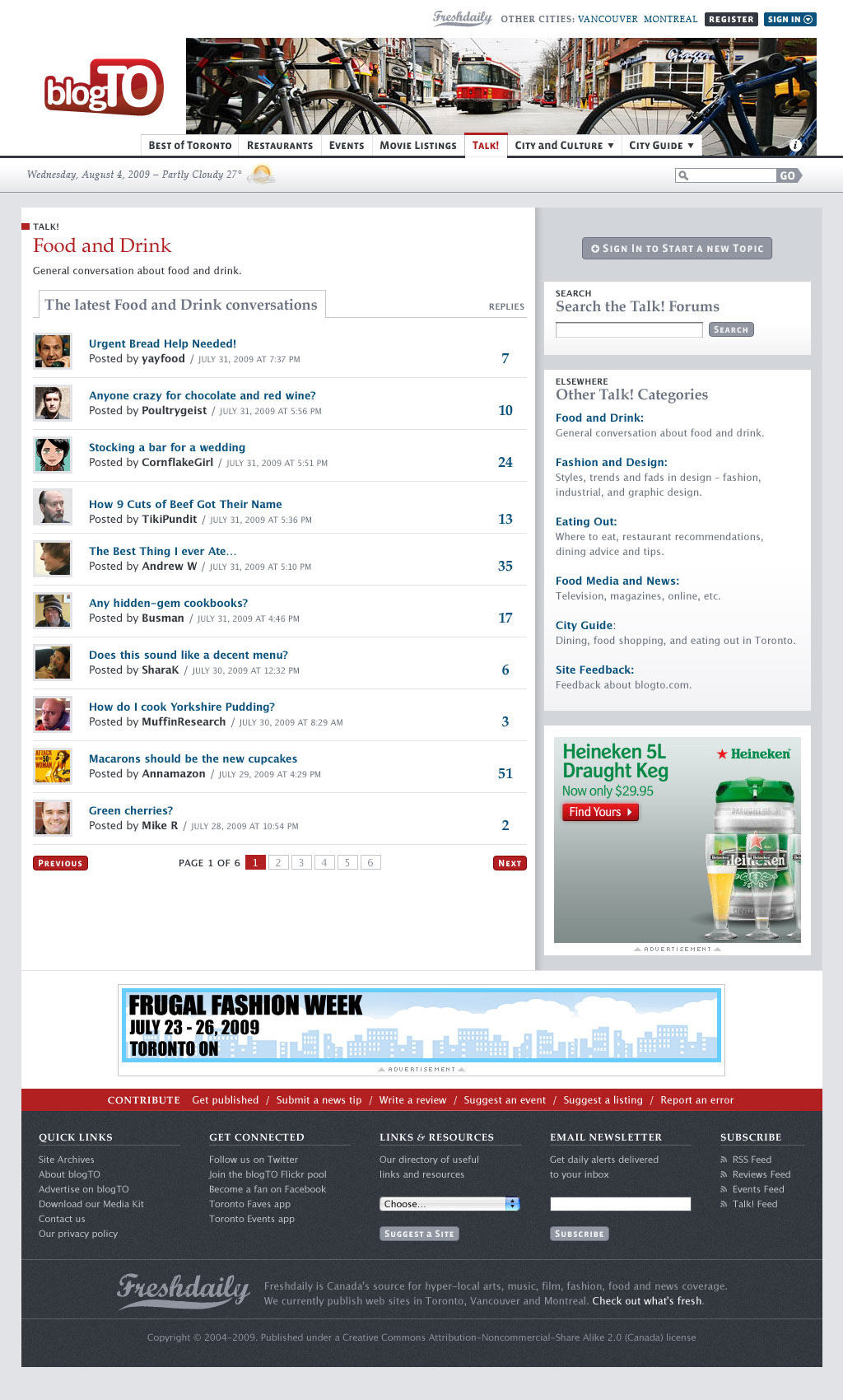
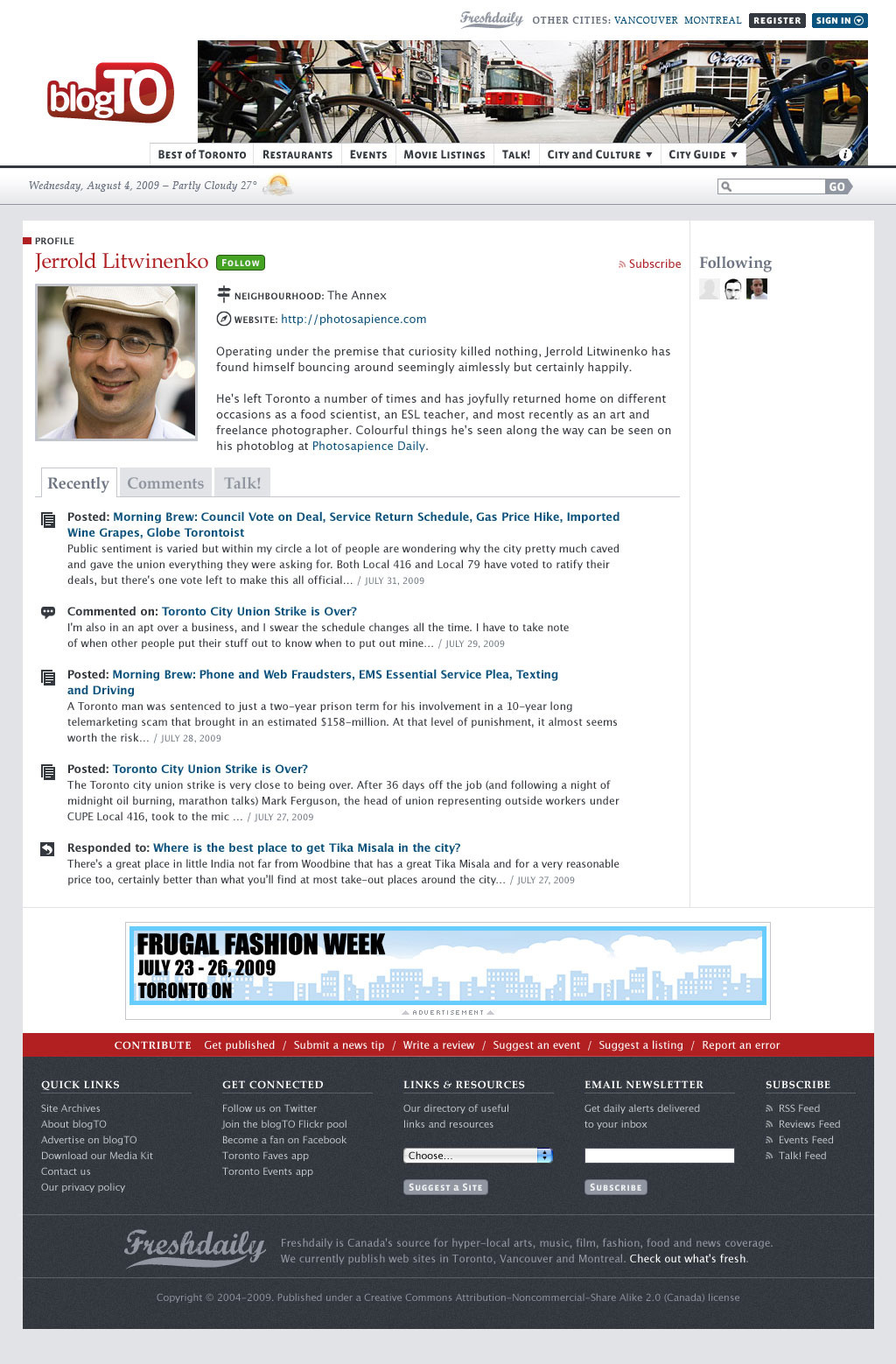
The San Francisco team had built something similar for a food site called Serious Eats and had developers experienced with Movable Type, which is why we thought they were a fit. After six months, the project was still too buggy to ship. I pulled the plug. It was an expensive lesson in the limits of trying to build features on out-of-date infrastructure.
Our team gatherings had evolved, too. The basement meetings where we’d reviewed stats and run tutorials had given way to what we called blogTO Socials: get-togethers three or four times a year at a bar or restaurant. I’d try to pick somewhere newly opened each time, in a different neighbourhood, so people could experience a place they hadn’t been before.
In November, a legacy Toronto media company approached me about buying blogTO. The owner was shrewd enough to recognize that digital was going to reshape the media business and that they didn’t have a digital property of any substance. blogTO, they believed, could fill that gap.
I’d never started blogTO with the intention of selling it. I’d never had an exit strategy. But I figured there was no harm in hearing what they thought the site was worth.
Their initial offer valued blogTO at $1 million: $250,000 upfront for a 25% stake, with an option to acquire an additional 24% over the following two years for another $250,000, bringing their total ownership to 49%. They eventually raised their valuation to $1.5 million. There were conditions. The initial $250,000 would need to be reinvested in hiring sales staff and improving the site. Any expense over $10,000 would require their approval. Earnings would be paid out as dividends, 49% to them. And they wanted the first right of refusal on the remaining 51% if I chose to sell.
I didn’t think it was a great offer. But more than that, I didn’t want a partner. I was happy where I was. I wanted to see how far I could take this on my own.
I said no.
It was the right decision. blogTO was growing faster than ever. The brand had become part of the fabric of life in Toronto. In the years ahead, we’d finally hire our first full-time employee. We’d get a real office. We’d release four different iPhone apps. We’d embark on a six-figure website redesign. And we’d make our first acquisition.