


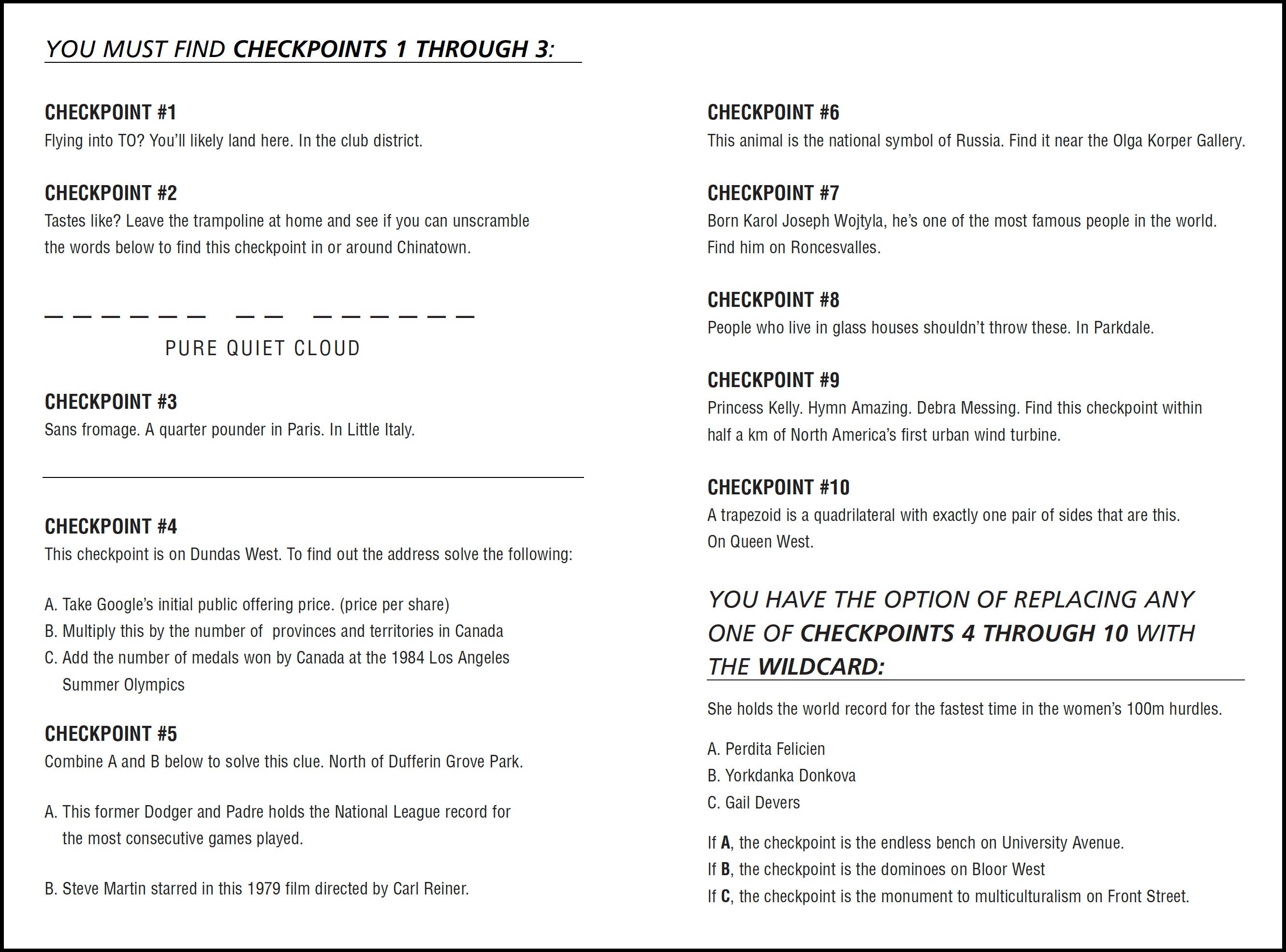
After deciding that starting a non-profit water company wouldn't work, I began thinking about other business ideas. I heard about an event called Urban Challenge, inspired by "The Amazing Race." Teams of two would run around a city on foot. You'd get clues that led you to specific locations called checkpoints. At each checkpoint, you'd take a photo to prove you'd found it. The first team to visit all checkpoints and reach the finish line wins.
Urban Challenge was already in many U.S. cities, but it wasn't in Canada yet. I thought I could create a version in Toronto. But first, I wanted to see how it actually worked.
My girlfriend, Bronwyn, and I hadn’t travelled together yet. I suggested Seattle for our first trip. We could do the Urban Challenge race and stay with a friend who had moved there from San Francisco.
Neither of us had been to Seattle before. It was late August 2003. The weather was beautiful. We walked the city, hit some bars and restaurants. There was a huge rally for Howard Dean that weekend. Thousands of people showed up. He was running for the Democratic presidential nomination and looked like he might actually win. It was peak Howard Dean, before the scream incident. The energy was incredible.
We showed up on race day. About 250 people were competing. I can’t remember where we placed but it wasn’t near the top. We had fun, though. More importantly, I saw how the race actually unfolded, and how many clues and checkpoints made sense, and what the organizers did before and after the race. I also got a feel for what it was like to compete as a participant, what worked and what didn’t. I took detailed notes on it all.
When we got back to Toronto, I was confident I could create an Urban Challenge of my own.
I didn’t wait. I set a race date for October and moved fast. I built a website with help from former Agency.com colleagues, and secured sponsors. All proceeds would go to the Make-A-Wish Foundation, my father’s favourite charity.
I called it The Experience Running Project.
I tried to keep costs low. Steam Whistle donated the Roundhouse as the venue. I bought digital cameras to lend to participants since smartphones didn’t exist yet, figuring I’d spread the cost over future races. I paid for race bibs, rented a race clock, and hired a DJ. Bronwyn and some of my friends volunteered as staff. I ordered food from local restaurant Jumbo Empanadas to go with Steam Whistle beer for the post-race celebration.
For promotion, I made flyers and distributed them around the city, and submitted the event to free listing sites. But the real boost came from media coverage. CBC did a TV segment. The Toronto Star wrote an article comparing it to Urban Challenge.
75 teams signed up.
Just before race day, I noticed a flyer for something called City Chase. It was a similar concept. I did some digging and figured out the two people who were behind it. Then I noticed they’d signed up for my race. They were doing research, just like I’d done in Seattle. After they finished, I introduced myself. I asked if they’d had fun and wished them luck with City Chase, which was scheduled for a few weeks later. They seemed surprised I’d figured out who they were.
Race day was exciting. The DJ was spinning music at the Roundhouse. There was good pre-race energy. The venue was nontraditional for a running race, which made it feel unique. People were curious and excited to see what this would be like. It was a good mix of participants. There were some runners, and some people who were clearly not runners but who I imagine thought they could be competitive in a race that relied as much on solving clues as on speed.
The race generated about $1,000 in proceeds. I wrote a cheque to Make-A-Wish.
It seemed easy enough to repeat. The next summer, I decided to go national. Nine cities across Canada. Winners from each city would get a trip to Montreal to compete in a championship for $10,000. Top teams from each city would be invited to compete, but only the winners would get free flights and hotel rooms. I got national sponsors like Vonage and Monster Energy. I found a hotel in Montreal to donate rooms, and secured venues in each city willing to host in exchange for sponsorship.
Then I made my biggest mistake.
I rebranded to Navigate the Streets. I thought it was a better name. I spent money on a new logo and website, but I threw away all the momentum from The Experience Running Project including the press coverage, the name recognition, and maybe some of the participants who might come back. All of this was gone because I wanted a different name.
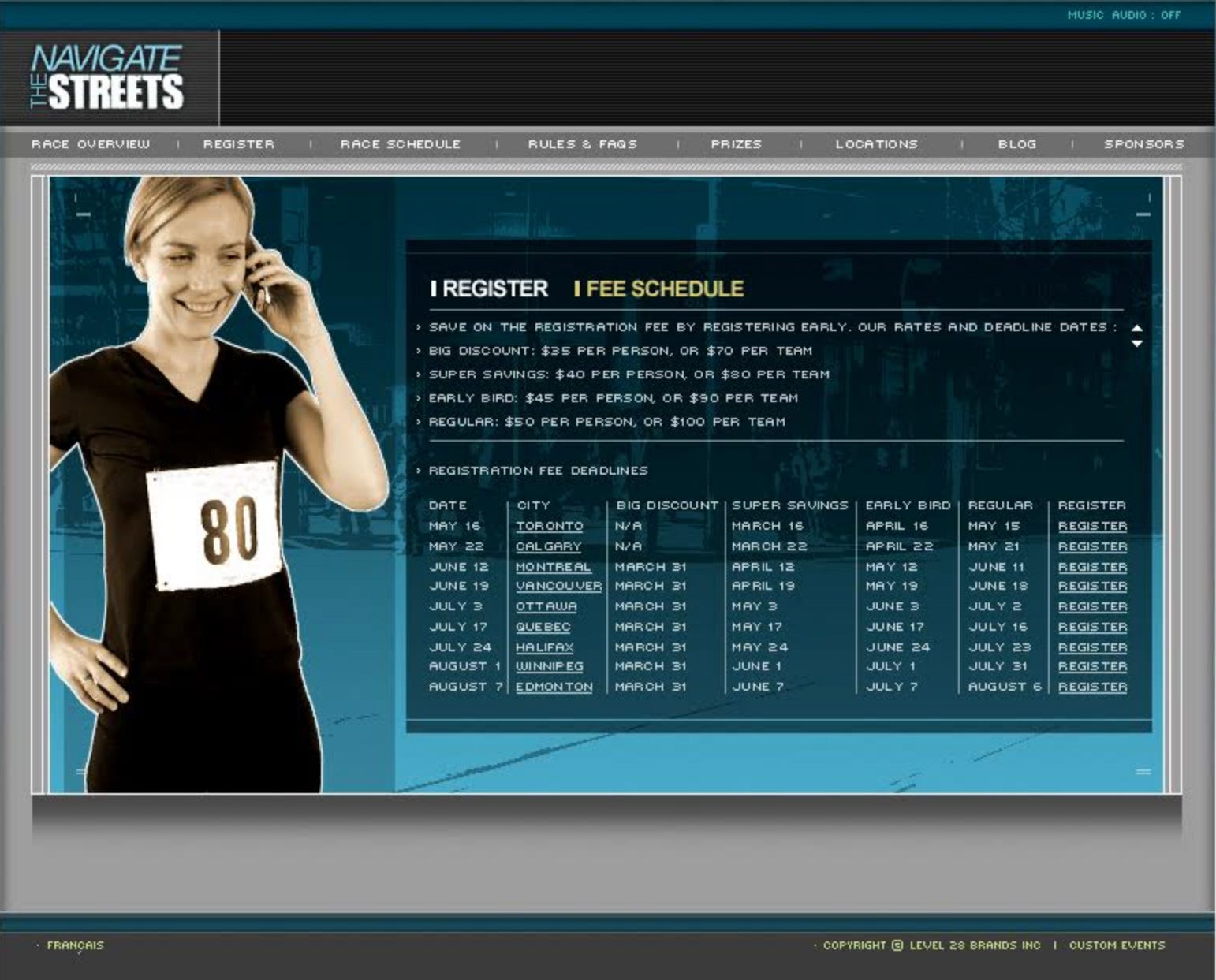
I also had no local knowledge of most of these cities. I’d never been to Halifax, Ottawa, Winnipeg, Edmonton or Calgary before. I had no connections there, no sense of the market, and no local staff or volunteers to help me execute the races.
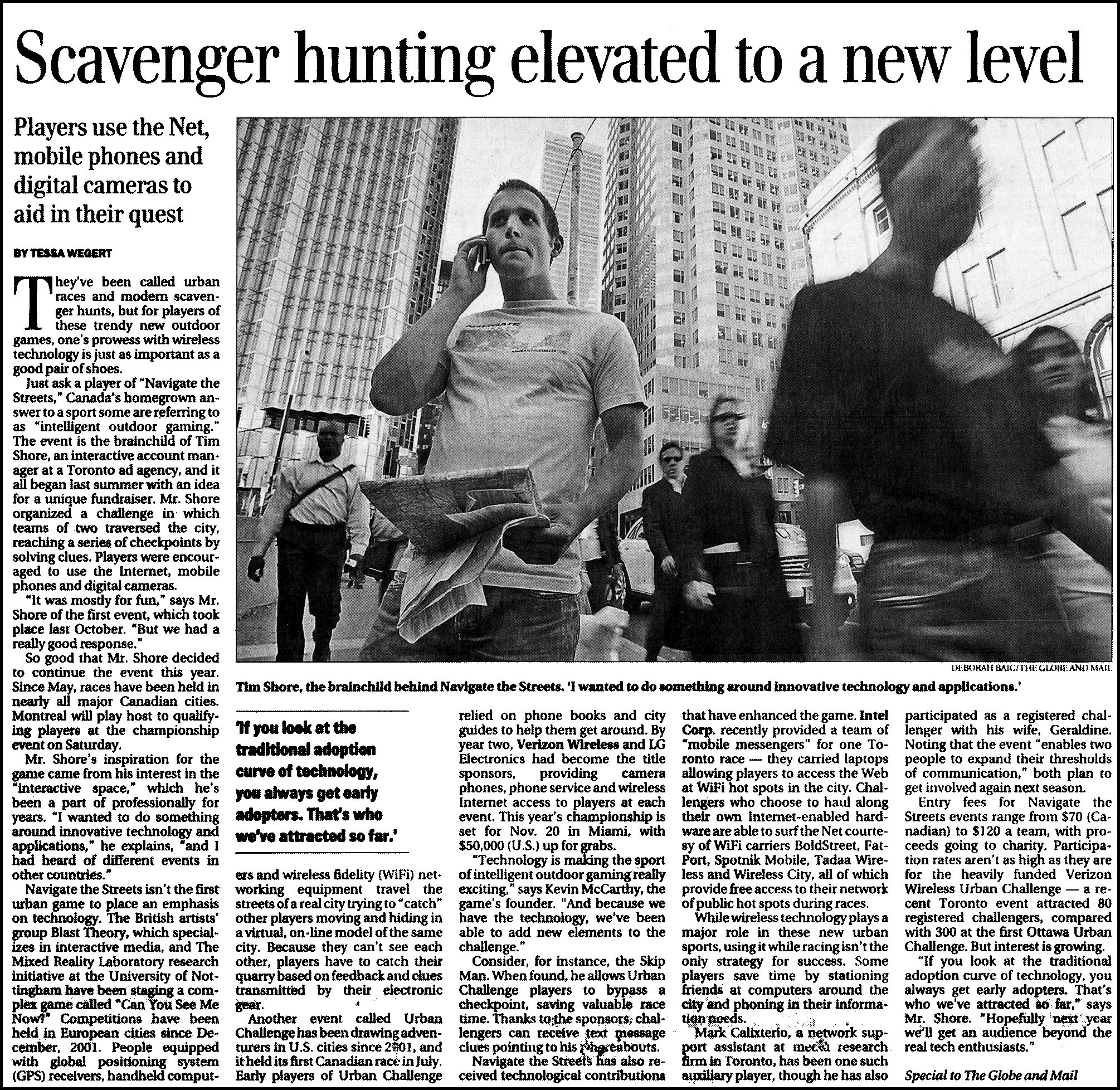
I spent money on flyers, Google search ads, online banners and print ads in alt-weeklies in each city. Now Magazine in Toronto. Fast Forward Weekly in Calgary. The Georgia Straight in Vancouver. It didn’t translate to enough sign-ups. Press coverage wasn’t as good either. The Toronto Star and CBC had already covered the event the year before. They weren’t interested again. I did get coverage from Explore Magazine, the Winnipeg Free Press, and the Globe and Mail, complete with a photo of me holding a cellphone and a map outside Union Station in my brand-new Navigate the Streets t-shirt.
Toronto numbers stayed flat. About 25% of participants from the year before came back. Vancouver's numbers were slightly lower than Toronto's. Calgary, Ottawa, Edmonton and Winnipeg weren’t great. Halifax and Quebec City numbers were so low that I cancelled the events. People who showed up still had fun, but the races felt much smaller than Toronto. I was embarrassed by the turnout. Even with ineffective marketing and low press coverage, I still thought more people would register through word of mouth.
I was losing money, and I still had to pay for the winners to fly to Montreal and compete for the $10,000 prize.
Before the championship, I sent everyone their flight and hotel details. I also told them I was lowering the prize to $1,000. I couldn’t afford more. People were disappointed but understanding. A free weekend in Montreal and the chance to compete again and be recognized as the national champion still had a lot of appeal.
The other problem was City Chase. They’d also gone national, hitting almost all the same cities, sometimes twice. They had sponsors like The Running Room, who would market the event to their huge database of runners. They promoted the event at other running events in each city.
After that summer, I was done. Navigate the Streets had been a lot of work, and I was feeling defeated. Having to cut the prize amount in Montreal was embarrassing.
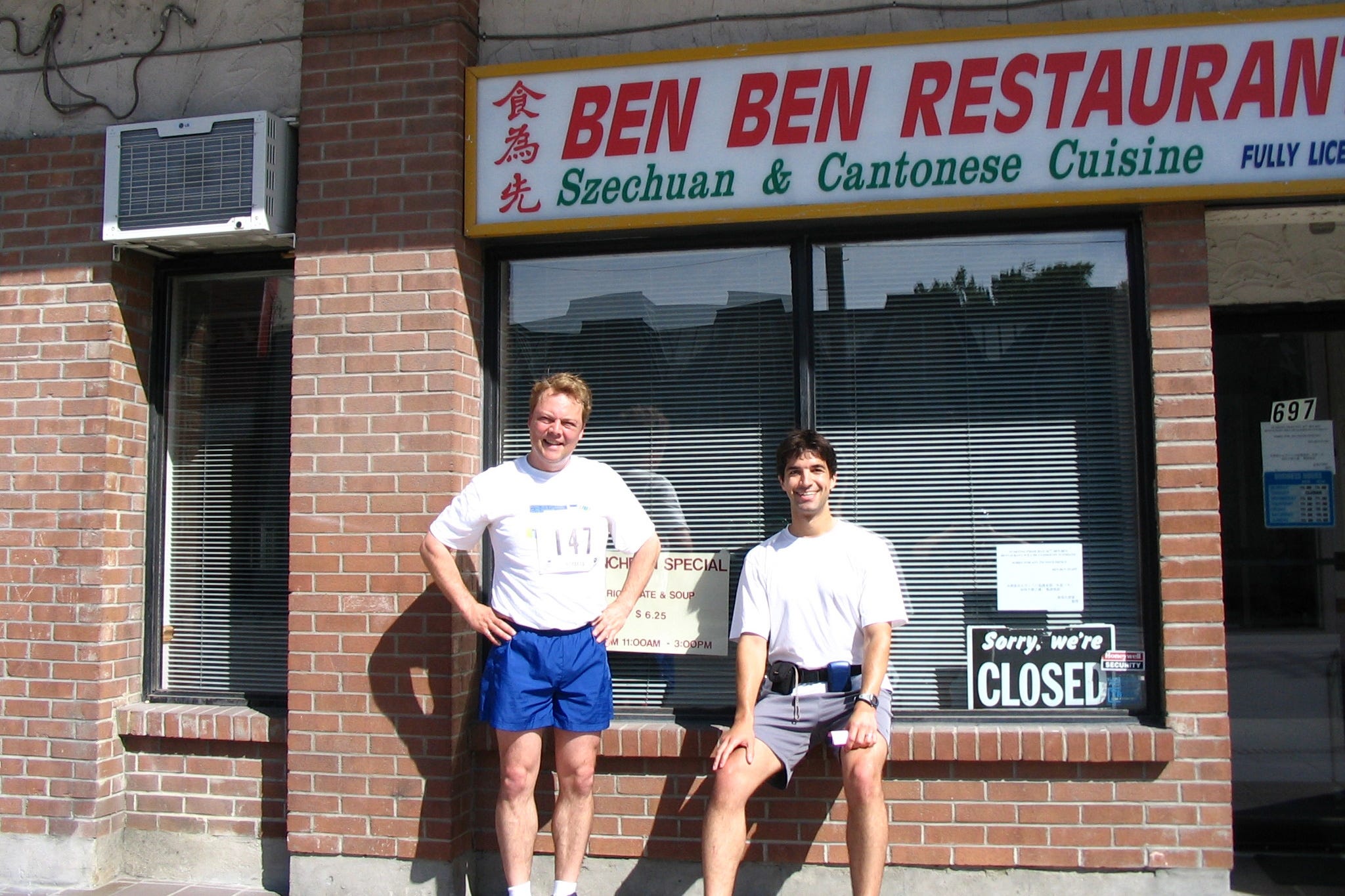
Navigate the Streets taught me things I needed to learn.
Execution matters. The concept was simple. What mattered was whether I could pull it off. First year in Toronto, I did. Second year, trying to scale, I didn’t.
Rebranding threw away momentum for no good reason. This lesson stuck with me. Years later, when I was running blogTO, people would occasionally suggest rebranding. blogTO wasn’t a perfect name. But I remembered what happened when I rebranded The Experience Running Project. There are real costs to rebranding, even when you think a different name sounds better.
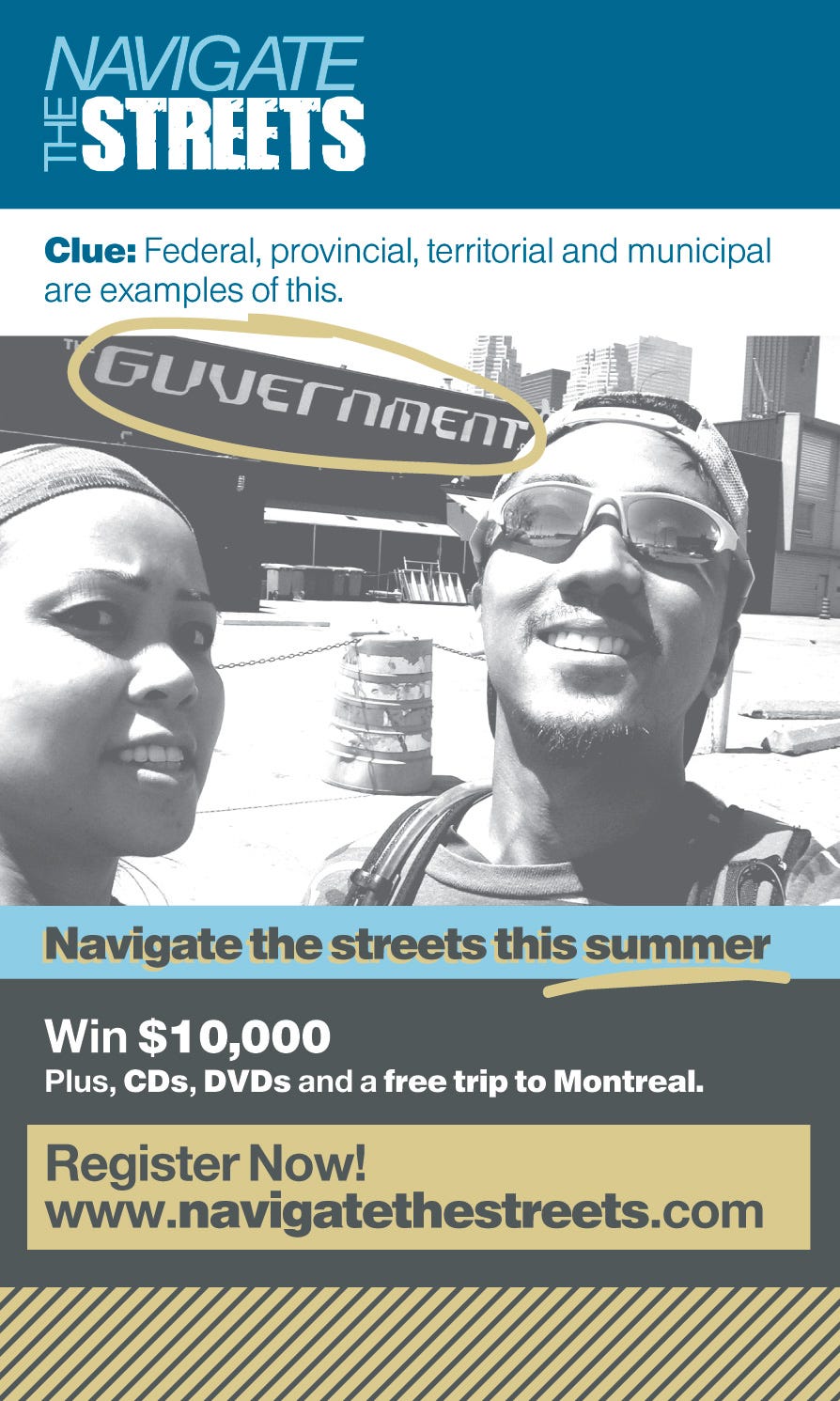
Local knowledge matters. I knew Toronto and Montreal. I’d been to Vancouver before. I didn’t know the other cities.
Competition changes the equation. Year one, I was first. Year two, City Chase was doing it better. Navigate the Streets was no longer unique.
But the most important thing: I liked building things. Even when it failed, even when I lost money, it was still a fun experience. People showed up and had a good time because of something I created. That mattered.
One more thing: I’d added a blog to the Navigate the Streets website. I posted updates all summer, photos and highlights from different cities. When Eye Weekly ran their Best of Toronto Readers’ Choice poll that year, I submitted it for best local blog. I asked my friends to vote. It won. They sent me a plaque, which I still have in my home office.
It reads: 'Navigate the Streets - Toronto’s best local blog.'
A few months later, I’d start blogTO.