


Near the end of 2013, we ran the last Morning Brew.
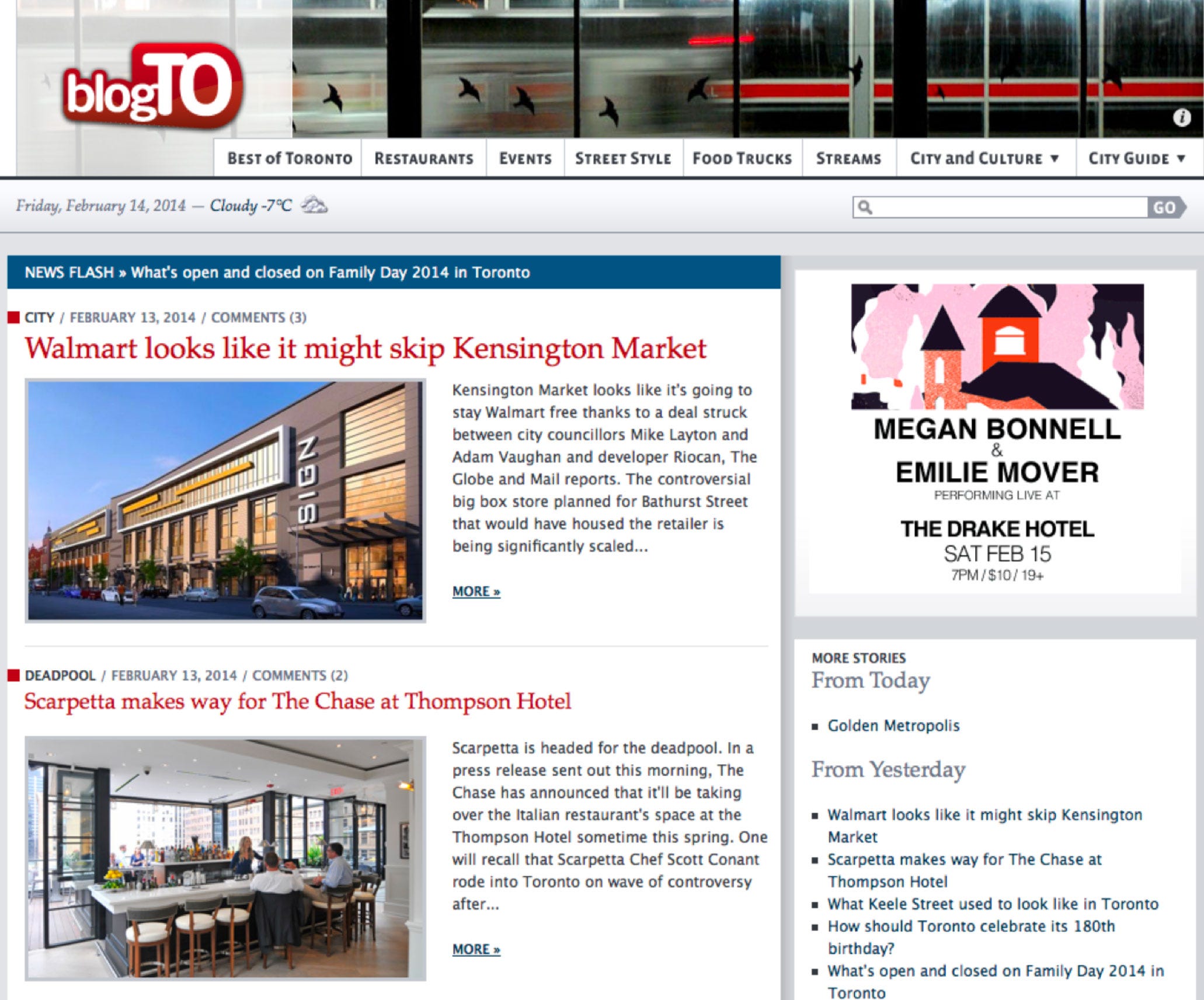
The daily round-up of Toronto news links had been a mainstay of blogTO since the early years. It had a devoted readership, but it really only served a small, loyal segment of our audience. Page views had been flat for years. Its audience wasn’t growing. The broader readership wasn’t looking for curated summaries of news links from us. They were engaging with individual stories, often finding them first through search or on a social media feed.
The Morning Brew wasn’t built for search. It wasn’t conceived for the era when social shares played a critical role in content distribution. The data was clear. People didn’t share round-up posts the way they did individual articles, with clear, strong headlines. It also had very little shelf life. Whatever page views and engagement it received would come within the first 48 hours. After that, its long-term value to the site dropped to zero.
The Morning Brew readers let us know they weren’t happy with our decision. In its place, we dedicated more resources to breaking news. We had realized we could compete with legacy media on these stories because of the digital tools we used to quickly identify the most compelling ones, and because our social media reach was already larger than most of our competitors.
The decision was the right one. The analytics didn’t lie. The website kept growing. We were doubling our traffic every two years.
After we stopped publishing the Morning Brew, we noticed other Toronto websites copying the format. They must have figured our pivot was their opportunity. We weren’t surprised. This was a pattern we saw repeatedly over the years: we would try something, study the data, and if it wasn’t performing, we’d move on. Then we’d watch other publications copy the content we had just abandoned, only to eventually reach the same conclusion we had.
The end of the Morning Brew was part of a much larger shift in how digital media worked during this era, and it had everything to do with Facebook.
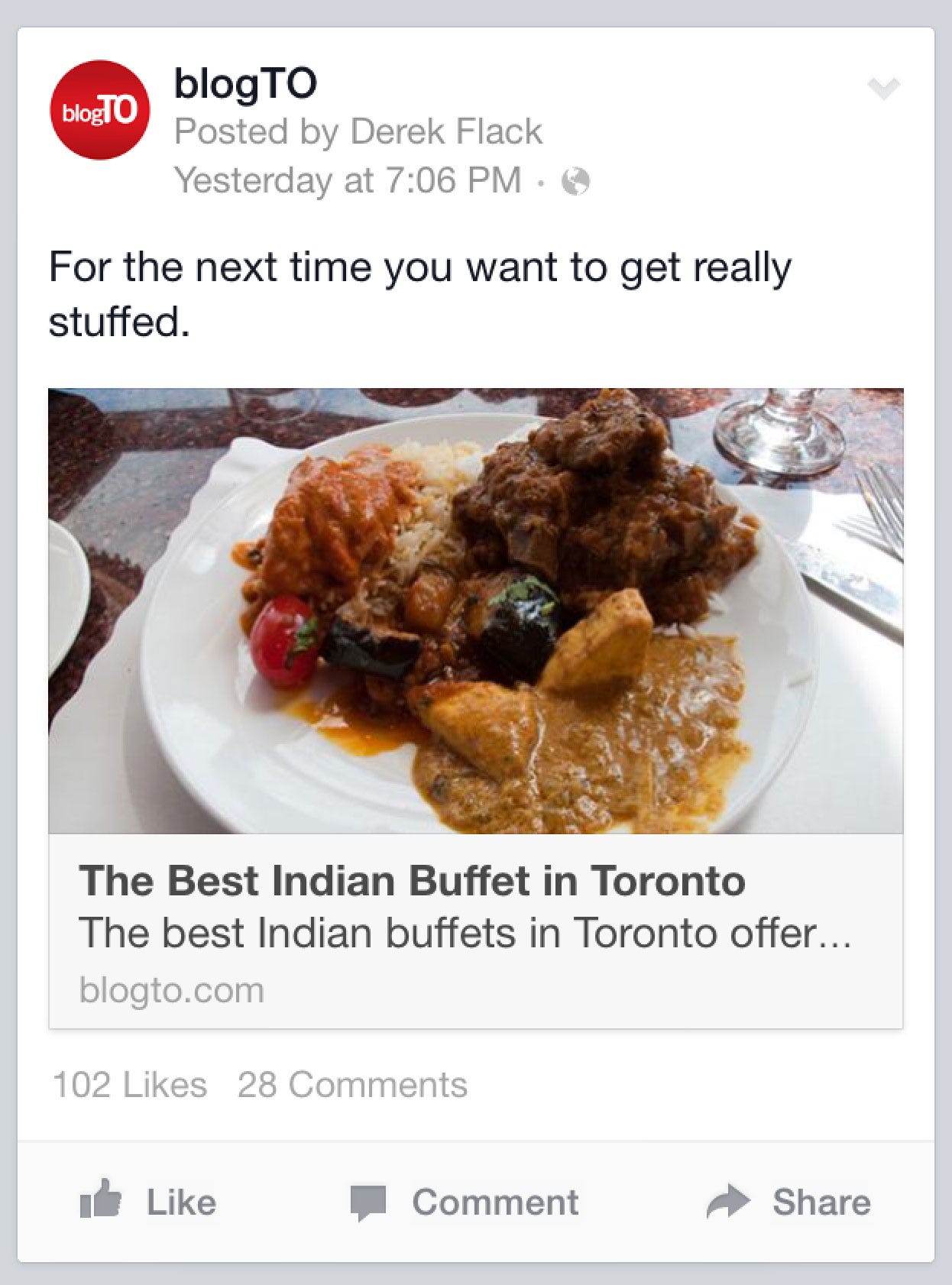
In 2013, Facebook redesigned the News Feed. They were increasingly prioritizing content that generated engagement and shares. Within a short time, Facebook had become the single most important distribution channel for many digital publishers. It became the place where a growing number of Canadians discovered, shared and consumed news.
U.S. digital publishers like Buzzfeed and Upworthy had figured out how to exploit this new reality. They crafted headlines that sparked curiosity or elicited a strong emotional response. We studied what these publishers were doing and adopted tactics that made sense for us. We became more deliberate about how we wrote headlines, which images we selected, and how we packaged stories to perform in the News Feed.
We also invested in tools that gave us an edge.
Chartbeat was a real-time analytics platform built for digital publishers. It tracked how many readers were on the website at any given moment, which articles they were reading, where they had come from and how long they were staying. It could show us, second by second, whether a post was gaining momentum or falling flat. We always had it open in our browsers and soon mounted flat-screen TVs on the office wall so we could simply look up and see what was happening. If a post wasn’t performing well, we’d often go back in and change the headline or swap the lead image.
Google Trends was another critical tool, as it helped us understand what people were searching for. We used it constantly to plan content. Before writing a listicle, we’d check whether there was enough search interest in the topic to justify it. For breaking news, we’d see how people were actually searching for a developing story and then optimize our posts to match.
We also used Spike, a social media monitoring tool from NewsWhip. Spike tracked which stories were gaining traction across the web in real time by keyword, topic or geography. It also showed us how content from competitive publications was performing. We could see which content was resonating at publications like the Toronto Star and the CBC, and, equally important, what wasn’t, which helped us identify which stories to avoid. The tool was critical to our breaking news coverage, helping us decide what to cover and how to frame it.
Seasonal guides also became a bigger priority for us around this time. We would publish a set of guides on what to do in Toronto each spring, summer, fall and winter. The content was popular with readers, and advertisers loved it too, so they generally bought up all the ads next to the articles, which more than justified the extra time and resources it took to create.
Our listicle output had expanded well beyond the Best of Toronto posts we had become known for. The potential topics were practically endless. One of the fun listicles in 2014 was a series by Liora Ipsum that mapped the best cheap eats, coffee shops, bars, and restaurants in Toronto by TTC subway stop. For each post, we recreated the subway map, replacing the station names with the businesses we had selected for each stop.
Real estate was also emerging as a growing content area. Readers especially loved our House of the Week and Condo of the Week posts, where our team of writers, including Leslie Bank, Amy Michelle Smith, Isabel Ritchie, Alana Charles, and Meghan Jeffery, profiled interesting properties currently for sale in Toronto. The posts featured photos, details about the listing and the writer’s personal thoughts on the property.
In 2014, Bosley Real Estate signed on as the exclusive sponsor for what would become a five-year commitment. Some readers wondered whether Bosley was choosing the properties. They weren’t. We never discussed the posts with them. We kept a strict separation between editorial and advertising. At the bottom of each article, we included a disclosure noting that all editorial selection and writing was done by blogTO.
The sponsorship revenue more than covered the cost of the content. We put the surplus right back into our editorial operations, growing the real estate section, which would, in the years to come, become one of the website’s highest-traffic topics.
All the algorithm optimization in the world wouldn’t have mattered without writers who could produce content worth reading and sharing. While some of our staff writers now handled breaking news, the majority of the team continued to produce original content that distinguished blogTO from our competitors.
Ed Conroy was a cultural historian and archivist who had spent years collecting old VHS and Betamax tapes of Ontario television, digitizing recordings of commercials, public service announcements, local TV shows, and other material recorded in the 70s, 80s, and 90s. That personal archive, combined with his own memories of growing up in Toronto, gave him a well of material that he turned into posts unlike anything else we published.
One of his most popular pieces was a nostalgic look at how Scarborough was once home to the world's largest McDonald’s, a sprawling restaurant at the Toronto Zoo that operated from 1974 to 1990. His article on Adventure Playground, a free-form play space on Toronto’s waterfront where kids could build things with real tools and materials, captured something that could never exist today and triggered a flood of memories from readers who had been there as children. And his piece on the birth of late-night TV in Toronto, exploring a time when local broadcasters still signed off for the night, and the city didn’t have 24-hour television, was the kind of deep cut that drew directly from his archival work.
Ed’s nostalgia lists, like “30 signs you grew up in Toronto in the 1980s,” were also guaranteed to drive traffic thanks to the engagement they’d spark on Facebook. We would resurface Ed’s posts years later for a new generation of readers, and they would perform just as well. After his time with us, Ed wrote a book titled ImagiNation: The Golden Age of Toronto Kids’ TV and mounted an exhibit in Toronto on the same theme. His archives live on at his excellent website, Retrontario.
Martha Stortz brought a background in comedy and improv to the team. She was the kind of writer who would sign up for Toronto’s first mermaid school and come back with a piece that perfectly captured the absurdity of the experience. Martha covered nightlife, bars, parties and events with a voice that never took the subject too seriously. Reviewing the newly opened The Addisons Residence, she described trying a cocktail and going “from Grace Kelly to Gary Busey in the course of ten minutes,” and closed the piece by noting she was “personally grateful [the bar] exists because I legitimately don’t know anyone in real life with a house this nice that would invite me over.”
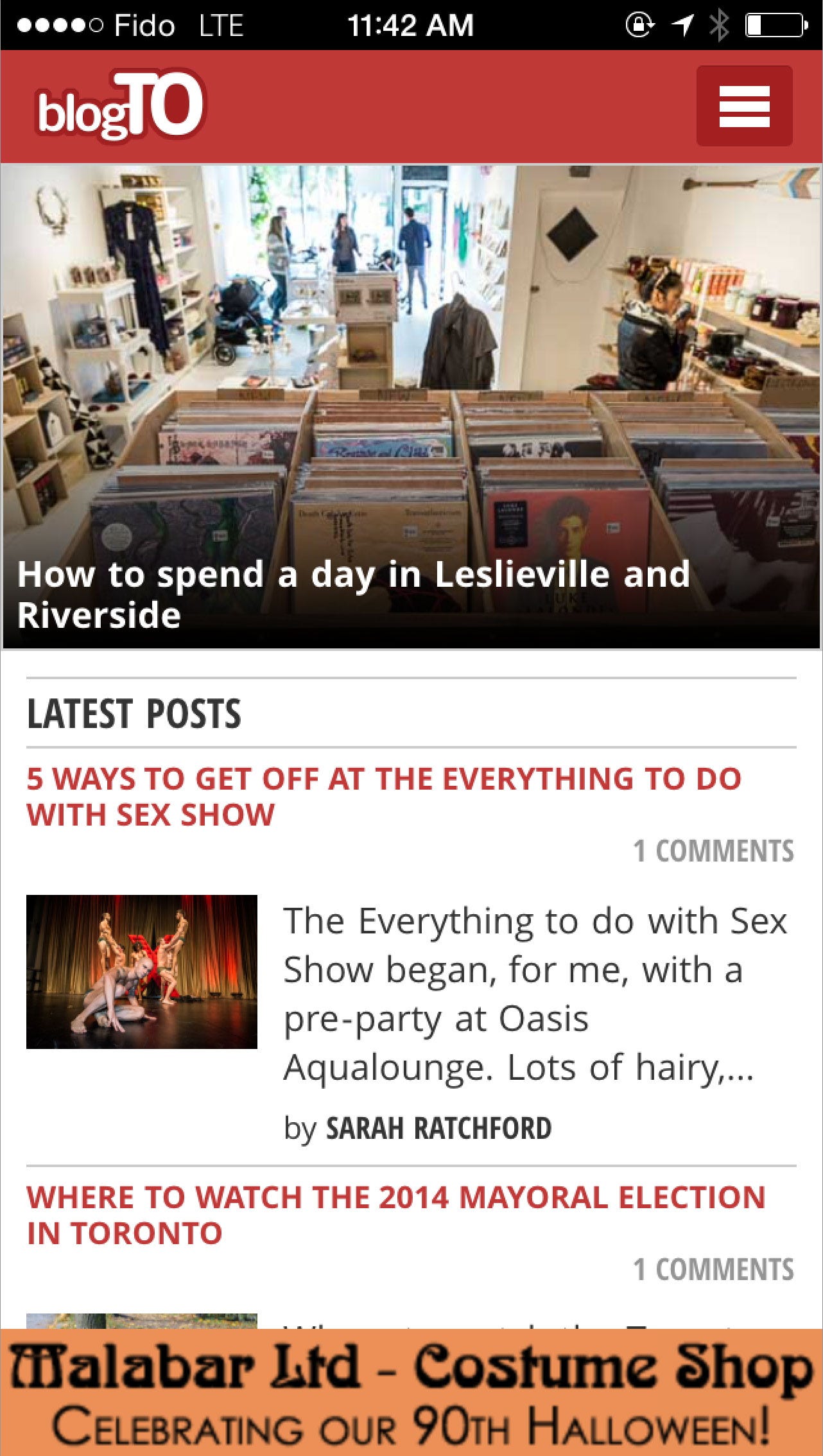
Some other notable team members during this period included staff writer Sarah Ratchford, who later became This Magazine’s Editor. Benjamin Boles was someone whose writing for Now Magazine I had long admired. When he started covering Toronto’s nightlife scene for us, it brought depth and authority we hadn’t had before. Josh Chong and Christina Cheung were valued members of our food team. And James C Lee helped cover retail stores as a member of our freelance photography team.
As was common throughout blogTO’s history, the competitive landscape kept shifting.
Narcity expanded to Toronto in 2014. It was from the same team behind MTL Blog, a Montreal website that had drawn criticism for its editorial practices. Their content didn’t impress us. A lot of it seemed to come from young writers who didn’t know the city very well, and factual errors were common. But they clearly understood how to package content for Facebook. Their posts were generating an impressive volume of engagement, particularly articles about things to do and day trips from Toronto, which were inherently shareable.
Zomato, the restaurant discovery platform originally based in India, also entered Toronto in 2014. The Toronto Star asked me what I thought about them. I said that Toronto was “spoiled for choice” when it came to restaurant apps, and that global platforms often struggled in local markets where they faced established competition like us. After the article went live, Zomato’s Canadian manager reached out to me to explore a partnership. I declined. Zomato would acquire Urbanspoon the following year, but never gained a strong foothold in Toronto. They shut down their Canadian operations in 2022.
In 2015, Buzzfeed arrived. They had been hinting at a Canadian expansion for months, and that June they officially opened a Toronto office in the same building where The Toronto Standard had set up shop years before. Craig Silverman, who had been the Editorial Director for short-lived OpenFile, was brought in to lead their team. BuzzFeed hired some talented staff and competed with us for ad buys from the big agencies, so I watched it closely.
Meanwhile, Torstar continued to demonstrate that it had its head in the sand when it came to digital, investing $33 million in Star Touch, a tablet app modelled on Montreal’s La Presse+. It was fundamentally flawed. In an era when Facebook was the dominant platform for discovering and sharing news, Star Touch was a closed ecosystem that lacked social sharing functionality. You couldn’t share a story from the app to Facebook or any other platform. It was a deeply misguided and expensive bet on a distribution model that ignored how people were actually consuming content. Star Touch was shut down in 2017.
While we were navigating all the competitive threats, we were also spending more time dealing with content theft.
Sites were taking our articles and republishing them without permission, and chasing them down felt like a never-ending game of whack-a-mole. We would send formal takedown requests or file complaints to have sites removed from search results, but within weeks, a new offender would inevitably appear.
The most brazen case involved yorkbbs.ca, which had been translating large volumes of our content into Chinese and presenting it as original work. We likely never would have noticed if it weren’t for a reader who tipped us off. When we confronted the site’s operator, they tried to negotiate a licensing deal rather than take the content down. We said no.
Over the years, Yahoo, MSN, Vice and others had all approached us about licensing or syndication deals. My position was consistent: if people wanted blogTO content, they had to come to us directly.
Around the same time, the Huffington Post, which had been operating in Canada since 2011, plagiarized one of our articles. The irony was difficult to ignore. The article they copied was about Peace Collective, the Toronto brand behind “Toronto vs Everybody,” being accused of plagiarism by the designer who created “Detroit vs Everybody”. The editor of the Huffington Post never apologized but agreed to take down the article.
By 2015, annual revenue had reached $1.1 million, with expenses at about $850,000. It had taken us roughly a decade to breach the million mark, but we finally got there. For a small, independent digital publication competing with much larger, better-funded organizations, it felt like a meaningful milestone.
We were profitable and self-sustaining. We weren’t reliant on government grants or subsidies. Every dollar came from advertising, as well as a couple of modest new revenue streams we had been building.
One of these revenue streams came from a partnership with a Toronto-based company, Universe, which processed ticket sales for an increasing number of local events. We integrated Universe into our event listings, which gave us a small cut of each ticket sale we sent their way. It wasn’t a lot of money, but it also required very little effort on our part once we had set up the proper integration and tracking mechanisms.
We also started getting requests from international magazines, marketing and design agencies, and local businesses to license some of the original photos we had invested in to accompany our articles. It was an unexpected revenue source that grew over time. We split the licensing revenue in half with our photographers.
One thing that wasn’t generating any revenue for us was branded content. It was growing in popularity, and requests from advertisers and PR companies would only increase in the years to come. Suite 66 was fielding these requests all the time, but they knew my position on this.
No reader had ever asked for branded content. Selling it meant putting advertiser interests ahead of the audience we had spent years building into a readership that trusted and loved what we did. I was willing to forgo the revenue to protect the relationship we had with our community.
It cost us. Suite 66 did their best to redirect those conversations to other ad formats, and they sometimes succeeded. But, usually, we lost the business. When an advertiser only wanted branded content, they would turn to competitors like Narcity or Toronto Life, which were happy to sell it. The decision was something I could live with, even if it meant propping up our competition.
One of the more consequential changes we made in 2015 was overhauling how readers commented on our articles. Comments had always been a core part of the blogTO experience. The discussions could be heated, funny, insightful and occasionally unhinged. But the system had been difficult to manage for years. Comment spam, impersonations, and other forms of bad behaviour that clearly violated our guidelines remained a constant issue.
We finally decided to make the switch to Facebook Comments, a plugin that had been extensively updated and released that year. It was built specifically for publishers like us and required readers to log in with their Facebook accounts to leave comments on articles. It wasn’t a perfect solution, but I felt it was the best option available. The biggest downside was significant: every comment from the site's previous 10 years was wiped out. The old system wasn’t compatible with the new one, and there was no way to migrate the old comments.
The reaction to this change was immediate. “I’ve been reading your website a few times daily for as long as I can remember,” one reader wrote. “I’m officially pulling the plug and removing your website from my fav and daily reading list.” Another was frustrated that participation had been restricted: “Commenting used to be open to all. Now with the narrow option to participate, my desire to follow this has waned.”
But not everyone was upset. “I think it’s fantastic that you flipped over to FB comments,” one reader wrote. “The shift in comment culture was noticeable from the moment you changed it.”
The change to reader comments was just one of the many significant updates coming to the website. In the next post, I’ll cover the period when we finally migrated away from the Movable Type CMS, launched a responsive website, and moved to a new site infrastructure that would propel us to record growth in the years to come.